

Bangkok is a city recognized for its bright energy, crowded streets, and magnificent skyline. Yet, anybody who’s spent time here will tell you that getting about effectively is crucial to properly experiencing everything the city provides.
Among the most dependable and accessible methods to tour around Bangkok are its mass transport systems: the MRT (Mass Rapid transport) and BTS (Bangkok Skytrain). If you’re unfamiliar with these systems, don’t worry, our guide here explains it all concisely for you.
Why Choose the MRT and BTS?
Bangkok is famed for its traffic bottlenecks, and although taxis and tuk-tuks have their charm, they may be sluggish at peak hours. The MRT and BTS networks give a speedier, air-conditioned option that’s great for both tourists and locals. They link vital areas of the city, making them a popular option for commuters, students, and visitors alike.
Getting Started With Cards and Tickets
Both systems offer various ticketing options to fit your travel needs.
Single-journey Tickets: Great for one-off trips, these can be purchased from machines or ticket counters at stations. Prices vary depending on the distance traveled.
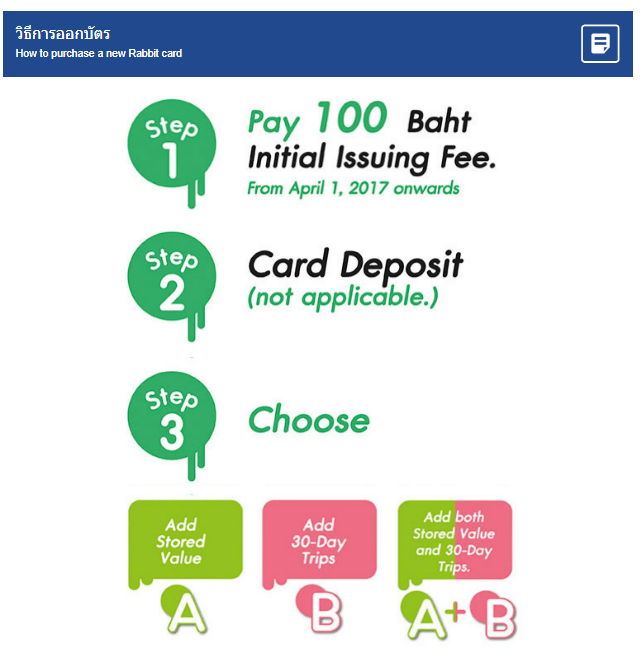
Stored Value Cards: If you plan to use the MRT or BTS frequently, consider getting a Rabbit Card (BTS) or a Stored Value Card (MRT). These cards allow you to pre-load credit and save time at ticket machines.
Day Passes: Ideal for tourists, these passes provide unlimited travel for around 140 baht on the BTS for a single day.
Keep in mind that the MRT and BTS operate independently, so separate tickets or cards are needed for each. For more details, visit the BTS website or the MRT website.
Understanding the BTS Skytrain
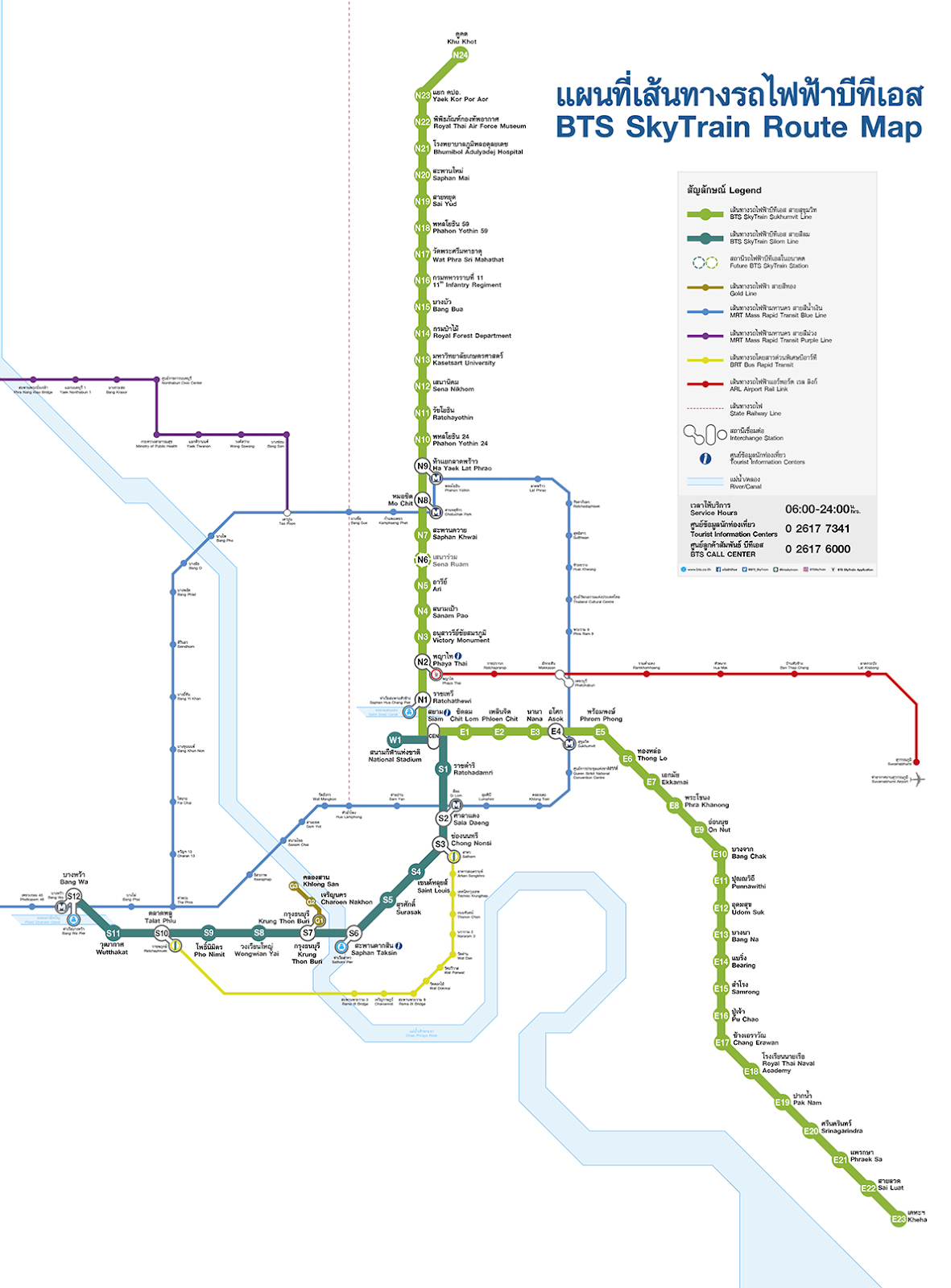
The BTS Skytrain, running above ground, offers scenic views of Bangkok’s urban landscape. It consists of two main lines:
Sukhumvit Line: This line stretches from Khu Khot in the north to Kheha in the southeast. Popular stops include Siam (for shopping malls), Phrom Phong (for Benchasiri Park and luxury retail), and Mo Chit (for Chatuchak Market).
Silom Line: Covering areas from National Stadium to Bang Wa, this line passes through financial districts and offers connections to key cultural landmarks.
Trains run frequently, typically every 3–5 minutes during peak hours. Stations are well-marked, and announcements are made in both Thai and English.
Exploring the MRT
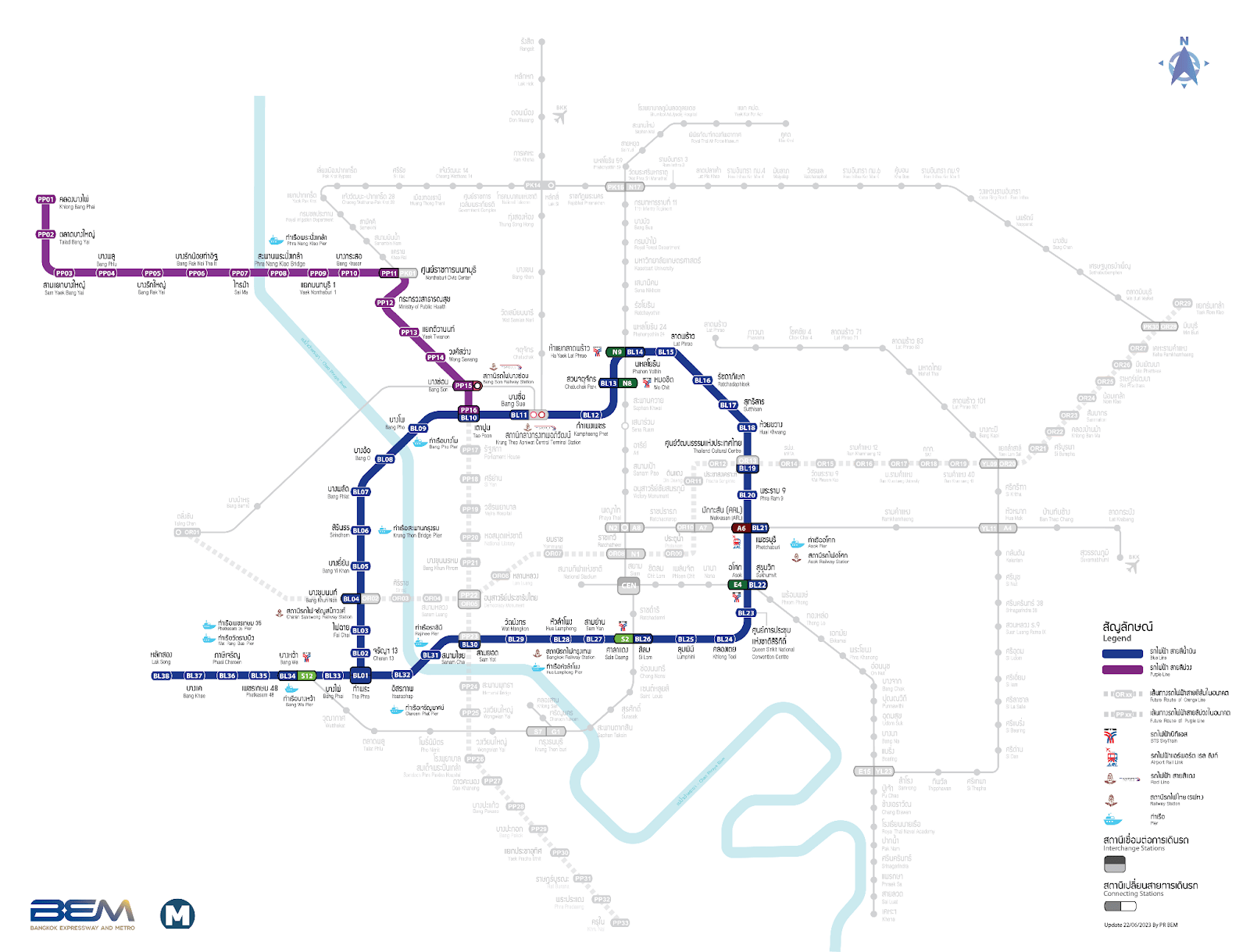
The MRT, Bangkok’s underground train system, offers two major lines:
Blue Line: This circular route connects major areas, including Chinatown (Wat Mangkon Station), the Grand Palace vicinity (Sanam Chai Station), and Sukhumvit.
Purple Line: Extending into Bangkok’s northern suburbs, this line is less frequented by tourists but serves as a key route for residents.
The MRT operates similarly to the BTS, with announcements in multiple languages and air-conditioned comfort.
Key Stops and What to Do
Here are some must-visit spots accessible via the MRT and BTS:
Siam (BTS Sukhumvit and Silom Lines): A hub for shopping enthusiasts, Siam is home to luxury malls like Siam Paragon and more budget-friendly options like MBK Center.
Asok (BTS Sukhumvit Line, MRT Blue Line): Located in the heart of Sukhumvit, this station gives you access to Terminal 21, a themed shopping mall perfect for quirky photo ops.
Chatuchak Park (BTS Sukhumvit Line, MRT Blue Line): A gateway to Chatuchak Market, the city’s largest weekend market offering everything from clothing to antiques.
Silom (BTS Silom Line, MRT Blue Line): Perfect for those visiting Lumpini Park or the bustling Patpong Night Market.
Sanam Chai (MRT Blue Line): This beautifully designed station is near the Grand Palace and Wat Pho, two of Bangkok’s most iconic attractions.
For those planning trips to nearby provinces, check Thailand’s State Railway website for seamless connections.
Transferring Between the MRT and BTS
While the MRT and BTS operate separately, they intersect at key points, making transfers relatively straightforward. The most notable interchanges include:
MRT Blue Line and BTS Sukhumvit Line: Interchange at Sukhumvit Station (MRT) and Asok Station (BTS).
MRT Blue Line and BTS Silom Line: Interchange at Silom Station (BTS) and Sala Daeng Station (MRT).
Keep in mind that you’ll need separate tickets or cards when switching between the systems.
Our Tips for a Smooth Ride
Plan Ahead: Use apps like Google Maps or the official MRT and BTS apps to map out your journey. These tools provide real-time updates on train schedules.
Avoid Peak Hours: If possible, travel outside the morning (7:00–9:00 AM) and evening (5:00–7:00 PM) rush hours to enjoy less crowded trains.
Stay in Your Lane: Bangkok’s train stations can get busy, so follow the markings for where to stand while waiting. Allow passengers to exit the train before boarding.
Keep Etiquette in Mind: Eating, drinking, or littering is strictly prohibited in stations and on trains.
Additionally, priority seats are reserved for the elderly, pregnant women, and people with disabilities.
Beyond Convenience
Choosing public transportation isn’t only about avoiding traffic; it’s also a more ecologically responsible way to commute. By riding the MRT and BTS, you’re contributing to fewer carbon emissions and promoting a greener city.
Future Expansions
Bangkok’s transportation network is always developing, with new expansions and lines under construction. These additions seek to make the MRT and BTS even more accessible, linking outlying districts to the city core. Keep a look out for updates, particularly if you’re planning a visit in the next coming years.
Getting Around Bangkok Easily
Getting around Bangkok doesn’t have to be intimidating. The MRT and BTS networks provide a dependable, inexpensive, and stress-free way to experience the city. Whether you’re a Bangkok native or simply traveling through, recognizing these transportation choices may make your trip in Bangkok a lot more pleasurable.