


Moving to Bangkok offers endless rewards, vibrant culture, friendly people, and excellent international schools, but for many expat families, one challenge stands out early on: the language barrier. English is widely spoken in tourist areas and international settings, yet daily life often calls for a little Thai. From greeting a neighbour to ordering food at a local market, even basic understanding can make everyday experiences far easier and more meaningful.
For parents, learning Thai can help with everything from navigating official paperwork to connecting with school staff. For children, it builds confidence and helps them feel more at home among Thai classmates and teachers. The good news is that learning Thai is now more accessible than ever. In 2025, there’s a wealth of modern resources, from AI-powered language apps to creative immersion programmes, designed to suit every learning style.
Here, we guide you on the most practical, engaging, and effective ways for both adults and children to learn Thai. Whether you’re settling into Bangkok for the first time or simply want to strengthen your family’s connection with Thai culture, these approaches will help you make real progress, one phrase at a time.
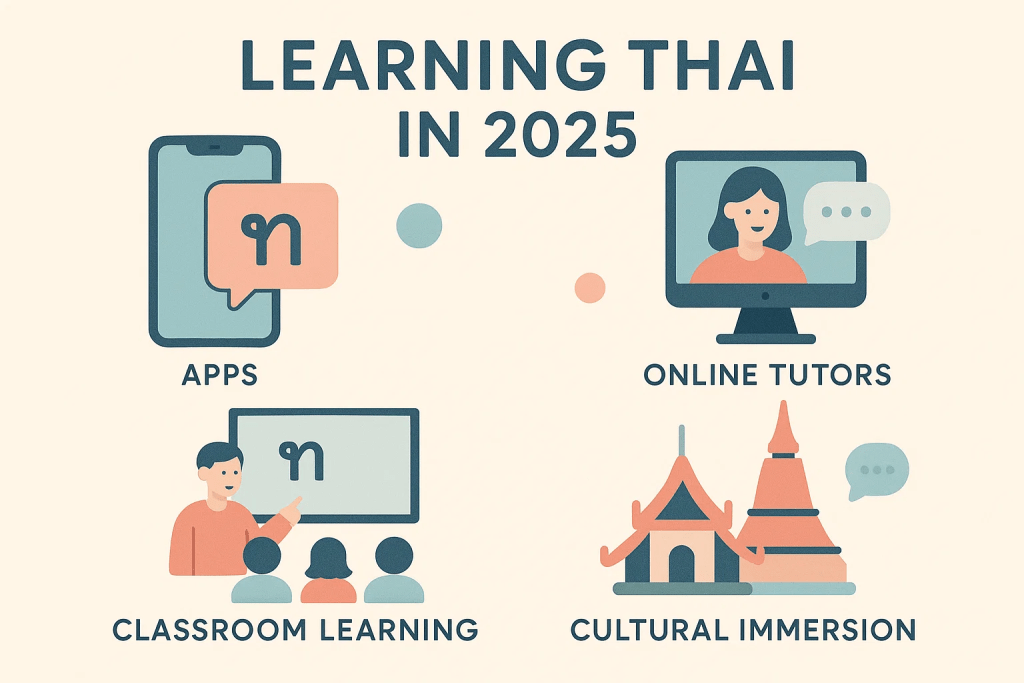
Showing different pathways to learn Thai in 2025, from apps and classes to cultural immersion
Why Learning Thai Still Matters in 2025
Even in a city as international as Bangkok, knowing a little Thai opens doors that English alone cannot. A simple “sawasdee kha” or “khop khun krub” instantly creates warmth and trust in daily interactions. It helps families connect with neighbours, understand cultural etiquette, and feel more settled in their new community.
For children, learning Thai can make school life smoother. It encourages friendships beyond international circles and helps them adapt to local traditions, festivals, and classroom dynamics. Even a small vocabulary gives them confidence to participate and belong.
Beyond social benefits, practical advantages quickly appear. Negotiating taxi fares, understanding local menus, or visiting the doctor all become easier.
Choosing the Right Way to Learn Thai
There’s no single “best” way to learn Thai, it’s about what works best for your lifestyle, goals, and motivation.
Language Schools and Classes
Institutions like AUA Thai Studies and Duke Language School remain favourites among expats for their structured lessons and patient teachers, though it’s a good idea to check what’s available in your local area or close to your place of work, for convenience. A classroom setting helps with pronunciation and tone, which are tricky to master alone.
Private Tutors and Online Lessons
For flexibility, many parents and teenagers now learn through online tutors on platforms like Zoe Thai or Preply. One-to-one sessions mean quick progress and lessons tailored to real-life situations, such as talking to taxi drivers or ordering food.
Apps and Tech Tools
Modern learners combine traditional study with digital tools. Apps like Ling, Drops, and Pimsleur turn vocabulary into quick, daily habits, while AI chatbots help practise natural conversation.
Quick tip: The best results often come from mixing formats, such as formal lessons for structure, and real-world practice for fluency.
Making Thai Learning Fun for Children
Children learn best when it feels like play. Turn language practice into games, such as alphabet puzzles, flashcards, or Thai word treasure hunts around the house. Apps like Ling for Kids make vocabulary lessons colourful and interactive.
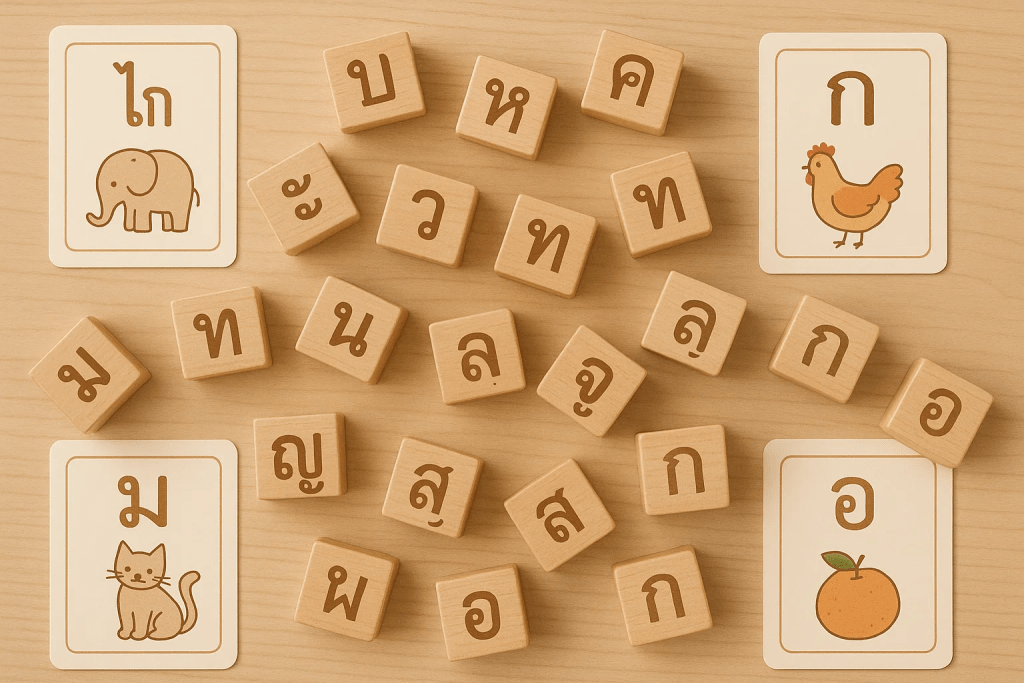
Thai alphabet flashcards and blocks for children learning Thai
Keep sessions short, around ten minutes a day, and celebrate small wins instead of aiming for perfection. Parents can join in too. Label everyday items in Thai or set a “word of the day” challenge at dinner.
Common Challenges of Learning Thai (and How to Overcome Them)
Thai can feel intimidating at first. The tones make words sound similar, yet mean entirely different things. Listening to native speakers or using pronunciation apps helps train the ear.
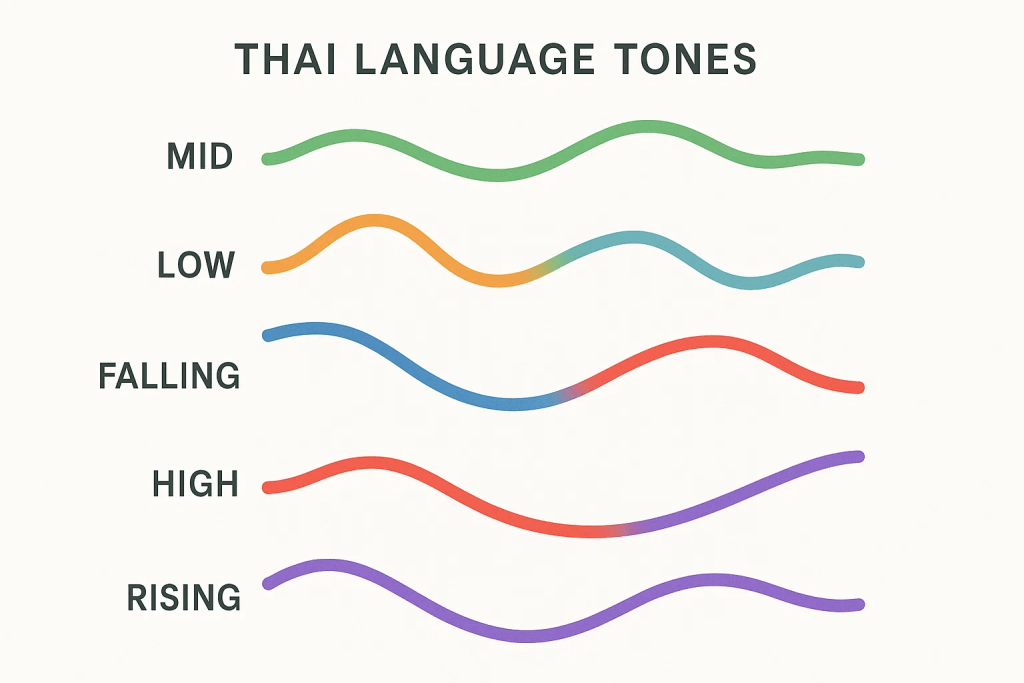
The five Thai tones represented with colourful wave patterns
Time is another hurdle for busy parents. Try “micro-learning”, even five minutes of Thai radio during breakfast or quick flashcard reviews in traffic. The hardest step is speaking aloud, so start with small conversations: order your morning coffee in Thai or ask a shopkeeper the price.
Living Thai Every Day
The quickest progress often happens outside lessons. Use Thai naturally in daily life, greet your neighbours, order food at a street stall, or chat with taxi drivers. Real conversations teach rhythm and tone far better than textbooks.
For families, everyday immersion can be fun. Join local celebrations like Songkran or Loy Krathong, where phrases such as sawasdee pee mai (Happy New Year) come to life. Watch Thai dramas or listen to pop songs with subtitles to pick up casual speech patterns.
The Real Reward of Learning Thai
Learning Thai is about connection. A few phrases can transform how you experience Bangkok, from friendly smiles at your local market to deeper conversations with colleagues or neighbours.
Parents who learn Thai alongside their children often find family life becomes richer. It creates shared experiences and helps everyone feel more rooted in their surroundings.
Start small, stay curious, and enjoy each milestone. Over time, those everyday exchanges become the heart of feeling truly at home. For more insights on adapting to life and schooling in Bangkok, visit School Finder Bangkok, your guide to international education and family life in Thailand.